Nineteenth Sunday after Pentecost (Our Lady of the Rosary)
Friends in Christ,
Welcome to our weekly Sunday update. This Sunday is the Nineteenth Sunday after Pentecost, also celebrated in some locations as the External Solemnity of Our Lady of the Rosary, the feast itself falling on October 7th. Pope Pius V originally called for the celebration, as Our Lady of Victory, to commemorate the Christian victory at the naval Battle of Lepanto on October 7, 1571. His successor, Pope Gregory XIII, subsequently designated the first Sunday in October as the feast of Our Lady of the Holy Rosary. On the day of the Battle of Lepanto, Pope Pius had called on the people of Rome to pray the Rosary while processing through the streets of the city. The popular belief was that the intercession of Our Lady had enabled the forces assembled by the Christian princes of Europe to turn back the Muslim invasion of the West. October is the month of the Rosary and one of two months especially dedicated to Mary. St. Dominic received the Rosary beads and prayers to be prayed in a vision of the Blessed Virgin he experienced in 1214. He is depicted on the left in Caravaggio’s painting (above); St. Peter Martyr is on the right.
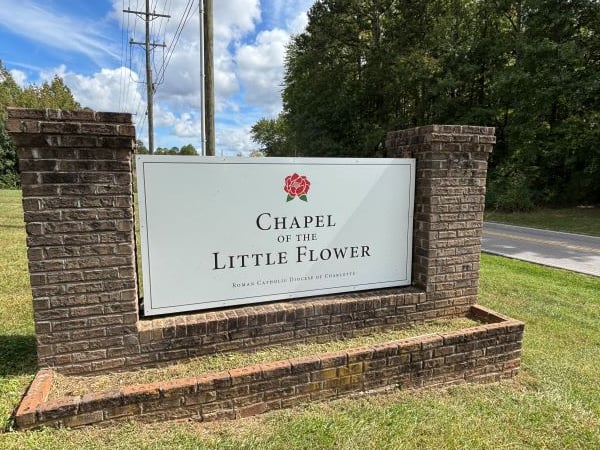
**Schedule note: The Chapel of the Little Flower will offer the External Solemnity of Our Lady of the Rosary this Sunday October 4**
Calendar of Special Observances
Celebrations are those listed in the Roman Missal of 1962.
DAY, DATE – FEAST (CLASS)
Sunday, October 4 – Nineteenth Sunday after Pentecost (II) – (USA) External Solemnity of Our Lady of the Rosary (II)
Monday, October 5 – Feria (IV) – Commemoration of St. Placid and Companions, Martyrs
Tuesday, October 6 – St. Bruno, Confessor (III)
Wednesday, October 7 – Our Lady of the Rosary (II) – Commemoration of St. Mark I, Pope and Confessor
Thursday, October 8 – St. Bridget of Sweden (III) – Commemoration of SS. Sergius, Bacchus, Marcellus and Apuleius
Friday, October 9 – St. John Leonardi, Confessor (III) – Commemoration of St. Denis, Bishop; Rusticus and Eleutherius, Martyrs
Saturday, October 10 – St. Francis Borgia, Confessor (III)
Nineteenth Sunday after Pentecost - External Solemnity of Our Lady of the Rosary
The links provided below can be used to download printable copies of the Proper Prayers for the Nineteenth Sunday after Pentecost and External Solemnity of Our Lady of the Rosary with English or Spanish translations, followed by commentaries by Dr. Michael P. Foley.
Nineteenth Sunday after Pentecost
External Solemnity of Our Lady of the Rosary
Traditional Latin Mass Schedule
Diocese of Charlotte Sunday Masses
Chapel of the Little Flower (757 Oakridge Farm Road, Mooresville, NC)
- 10:00 a.m. (Low)
- 12:00 p.m. (Sung)
- Chaplain: Fr. Brandon Jones
- Chapel related questions? Email Father at: tlmchapel(at)rcdoc.org
- DONATE: To donate to the Chapel of the Little Flower click here (via Saint Ann Parish, Charlotte)
- More details: https://carolinaliturgy.org/chapel
Note: Only Sunday Latin Masses and Holy Days are offered at the Chapel. This is the only Diocese of Charlotte location which offers the Traditional Latin Mass.
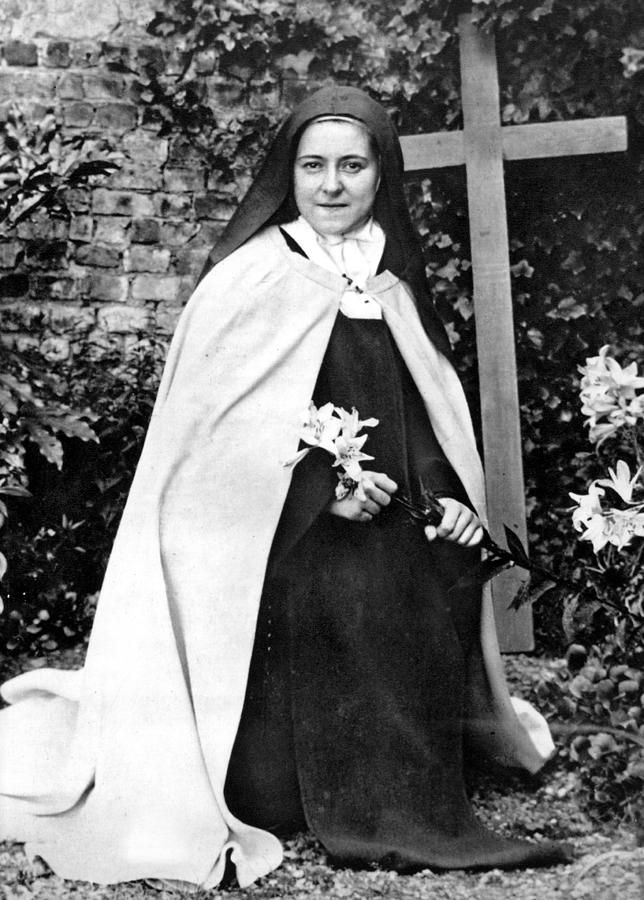
Saint Thérèse of the Child Jesus and the Holy Face, the Little Flower, pray for us!
Diocese of Raleigh Sunday Masses
- 1:00 p.m., Sacred Heart (Dunn, NC)
- 4:30 p.m., - First Sunday, Holy Name Cathedral (Raleigh, NC)
- 5:00 p.m., - Fourth Sunday, Basilica of Saint Mary (Wilmington, NC)
- For additional locations and Masses please see our Mass Times webpage
Diocese of Charleston Sunday Masses
- 12:00 p.m., Prince of Peace (Taylors SC)
- 1:00 p.m., Our Lady of the Lake (Chapin SC)
- 12:00 p.m., Sacred Heart (Charleston SC)
- 5:30 p.m., Stella Maris (Sullivans Island, SC)
Diocese of Charleston Daily Traditional Latin Masses
- Prince of Peace (Taylors SC) – Monday - Friday, 12 noon
- Prince of Peace (Taylors SC) – Saturday, 8:00 a.m.
- For additional locations and Masses please see our Mass Times webpage
As a reminder, travelers are urged to consult parish websites or offices for up-to-date information regarding possible changes in the schedule of Mass times.
Chapel of the Little Flower Announcements
Mass Intentions for Sunday
Sunday October 4, 12:00 p.m. – Mark, Sharon, Nick, and Maria Hoidas by the Family
Sunday October 4 Mass - External Solemnity of Our Lady of the Rosary
Father Jones will offer the External Solemnity of Our Lady of the Rosary this Sunday. The feast normally is commemorated on October 7.
Georgia Martyrs Brochures
In the Chapel narthex there will be limited quantities of brochures about the Georgia Martyrs, the five Franciscan friars who were martyred at their Spanish missions along the Georgia coast near Savannah in 1597. Venerable Pedro de Corpa and Companions will be beatified in Savannah – only a few hours from Charlotte – on Saturday October 31. To learn more about the martyrs or attend the beatification visit: www.thegeorgiamartyrs.org
October 3 - Patronal Feast Day of the Chapel
In the 1962 calendar, Saturday October 3rd is the Feast of Saint Teresa of the Child Jesus, otherwise known as The Little Flower. It is the patronal feast of the Chapel of the Little Flower. Please consider offering prayers for the Traditional Latin Mass and in thanksgiving for Father Jones’ dedication in offering Mass at the Chapel each Sunday over the past year.
Support Sacred Music at the Chapel by Joining the Schola and Choir
The Church teaches us that singing is praying twice. Please consider lending your musical talents to the beautifying of the sacred liturgy here at the Chapel of the Little Flower. If one would like more information about joining the schola and choir, please contact the Chapel music director whose contact information is at the bottom of the hymn sheets found on the table in the narthex. Thank you for your generosity.
Music Sheets Available in the Narthex
A reminder that music sheets are available in the narthex so that one may join in or follow along with the singing at the sung Mass.
Saint Ann Parishioner Catholic School Check In
If one is a parishioner at St. Ann parish and has children enrolled in the Catholic schools, please scan the QR code found on the table/wall in the narthex of the Chapel. This is the new attendance check in system.
Donations for the Chapel of the Little Flower
To donate to the Chapel of the Little Flower, please make out a check to “St. Ann Catholic Church” and carefully earmark it for “Latin Mass” or “Chapel of the Little Flower”. It can be mailed to the parish (3635 Park Road, Charlotte, NC 28209). To donate online, please visit the parish’s “Chapel of the Little Flower” online donation portal at this link.
Lost and Found
If one is missing a missal, book, or other item, please see the Lost and Found table in the cry room.
Father Jones’ Contact Info
If one has questions about the Chapel of the Little Flower, that are not related to one’s parish, please email Father Jones directly at: tlmchapel(at)rcdoc.org
Join Us at the Chapel of the Little Flower
If you haven’t attended Mass at the Chapel of the Little Flower yet, you are welcome to join us. Seating is adequate at both Masses, and there is plenty of parking; a cry room; open space outside for the kids after Mass. Bulletins from Saint Ann and Saint Thomas Aquinas parishes are usually available.
General Announcements
First Sunday Food & Fellowship Potluck at Saint Thomas Aquinas – Sunday October 4 will be the monthly Sunday Food and Fellowship at Saint Thomas Aquinas from 1:30 p.m. – 3:00 p.m. If you attend Mass at the Chapel, you can always drop by after Mass. Please consider bringing something to share.
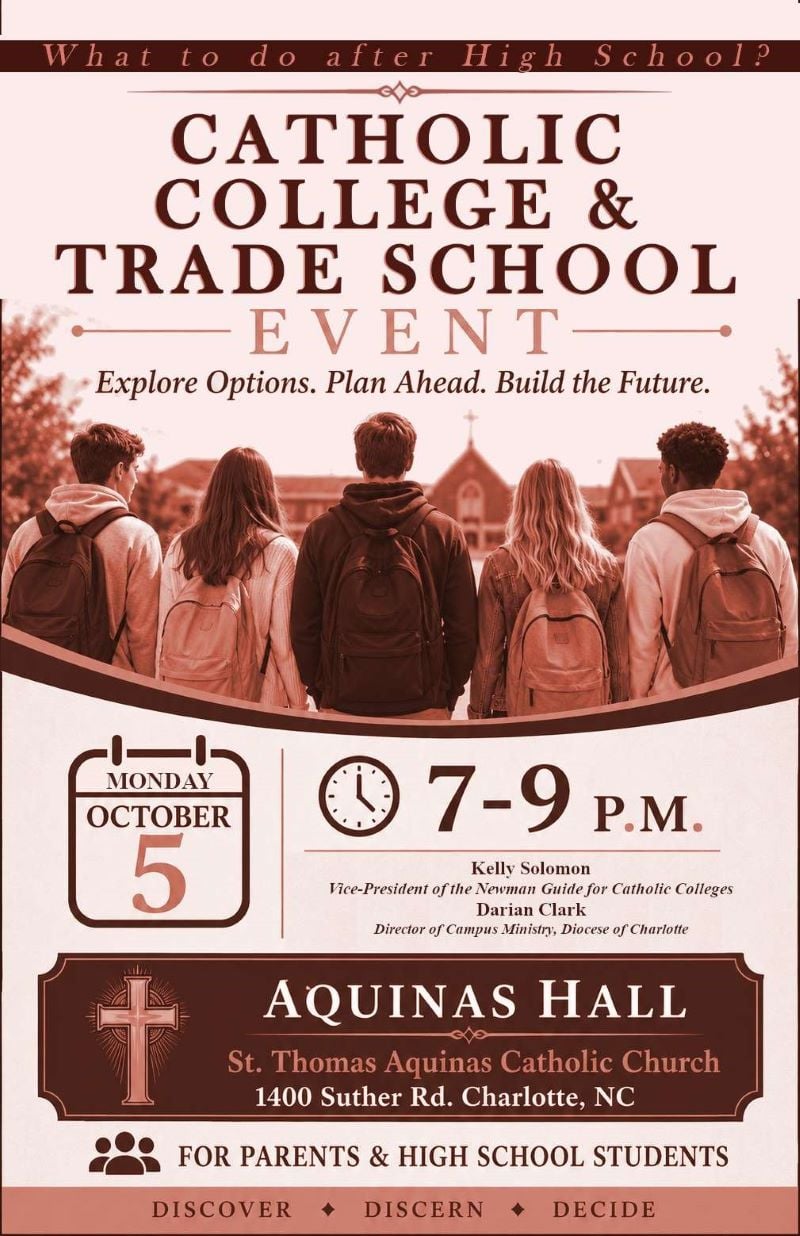
Catholic College and Trade School Event: Monday October 5 – Saint Thomas Aquinas is hosting an event for parents and high school students exploring the Catholic options for both college and trade schools. It will be held from 7:00-9:00 p.m. in Aquinas Hall. To learn more see the flyer at the end of this newsletter.
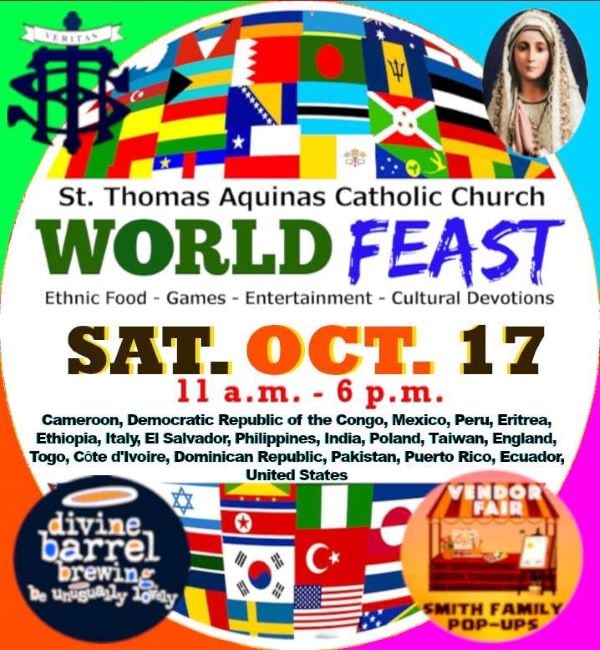
Saint Thomas Aquinas World Feast Day - Saturday October 17 – World Feast Day, Saint Thomas Aquinas’ annual carnival will be held on Saturday October 17 from 11 a.m. - 6:00 p.m. The event features ethnic dishes from over 15 countries, along with games, entertainment and cultural devotions. Please see the flyer at the end of this newsletter.
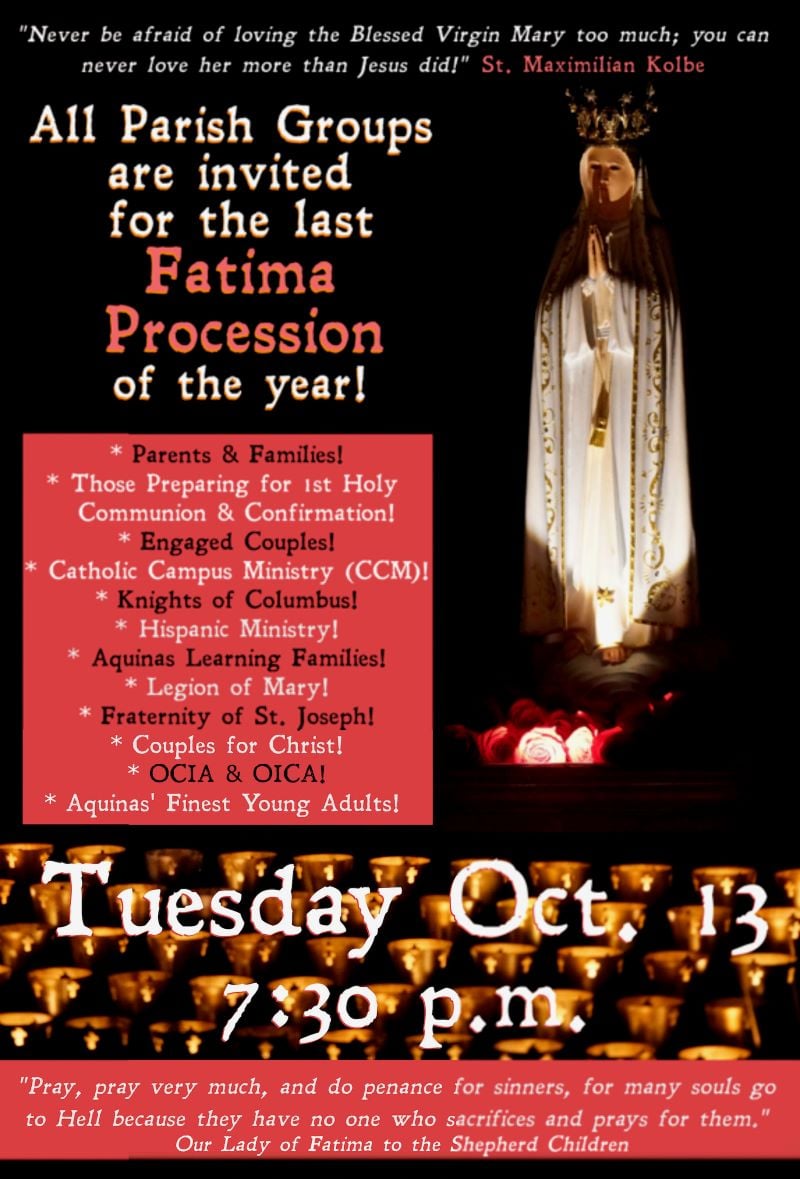
Fatima Procession at Saint Thomas Aquinas Parish – The final Fatima Procession of 2026 will be held on Tuesday October 13 at 7:30 p.m. All the faithful are invited to commemorate the 109th anniversary of the Miracle of the Sun. Please see the flyer at the end of this newsletter.
Support Saint Ann and Saint Thomas Parishes – Our parishes remain the anchor of our spiritual and community lives and continue to promote the sacred traditions, devotions, speakers and catechesis important for the spiritual growth of ourselves and our families. They also need our continued financial support (and occasional visits!). Both parishes would appreciate our continued generosity.
Bishop Martin issues Pastoral Letter to the Faithful Associated with the Society of Saint Pius X
- Bishop Martin issues Pastoral Letter to the Faithful Associated with the Society of Saint Pius X
- Catholic News Herald: Bishop Martin appeals to SSPX faithful: ‘The door of the Church is open’
LiveMass.net – Want to watch a Latin Mass online? The Priestly Fraternity of Saint Peter (FSSP) has a broadcast apostolate which streams its Latin Masses across the world at various times of the day. To view visit: https://www.livemass.net/
Rosary for the Traditional Latin Mass – A Rosary is offered for the restoration of the Traditional Latin Mass in the church on Sundays after the 11:30 a.m. Novus Ordo Mass at Saint Thomas Aquinas Church.
Daily Holy Face Chaplet for Sacred Liturgy (perpetual novena) – For the preservation of the Traditional Latin Mass, it has been recommended to all friends of the sacred liturgy in the diocese to consider continually praying the powerful Holy Face chaplet, under the banner of Our Lady of the Holy Name. To pray the chaplet, please see this link.
Cardinal Burke’s Prayer for Pope Leo XIV – His Eminence Cardinal Raymond Burke has released a prayer for Pope Leo XIV. Please see the prayer at the links below and consider praying this daily for the Holy Father as he leads the Church. PDF copies can be accessed at these links: [English] [Español] [Latin]
Holy Face Devotions
Prayers of Reparation to the Holy Face of Jesus are offered each week at the following churches on the indicated days:
- St. James (Concord) – Monday, 10-10:30 a.m. (in the cry room)
- St. Mark – Tuesday, 5:30 p.m.
- St. Thomas Aquinas – Tuesday, 6:00 a.m.
- St. Ann – Tuesday, 7:30 a.m. (following 7:00 a.m. Mass)
- St. Michael the Archangel (Gastonia) – Tuesday, 8:30 a.m. (following 8:00 a.m. Mass)
- St. Vincent de Paul – Tuesday, 8:40 a.m.
- Holy Spirit (Denver) – Tuesday, 10-11:00 a.m. (following the 9:15 a.m. Mass)
- Saint Elizabeth of the Hill Country (Boone) – Third Tuesday, at 6:45 p.m. after Mass in the Youth Room (League of St. Martin chapter)
- St. John the Baptist (Tryon) - First Saturday, 9:30 a.m. (after 8:30 a.m Mass)
Note: Days and times may be subject to change due to holidays.
“Jesus, Your ineffable image is the star which guides my steps. Ah, You know, Your sweet Face is for me Heaven on earth” (from Canticle to the Holy Face by Saint Thérèse de Lisieux, the 19th century Discalced Carmelite nun who took the name in religion, Thérèse of the Child Jesus and the Holy Face).
Traditional Latin Mass and Liturgical News
- Benedictines and the Portiuncula, Our Lady of Clear Creek Abbey (October 3, 2026). [Benedictines and the Portiuncula]
- Assisi to welcome thousands of pilgrims for 800th anniversary of St. Francis’ death by Diego López Marina, EWTN News (September 29, 2026). [800th Anniversary of St. Francis’ death]
- Venue Selected for Beatification of Georgia Martyrs by Kathleen Murphy, NC Register (September 28, 2026). [Venue Selected for Beatification of Georgia Martyrs]
- Blessing of Roses by Fr. William Rock, FSSP, The Missive (October 3, 2026). [Blessing of Roses]
- The Politics of Michaelmas by Charles A. Coulombe, OnePeterFive (September 29, 2026). [The Politics of Michaelmas]
- Maria SS. della Lavina 2026 by Fr. William Rock, FSSP, The Missive (September 30, 2026). [Maria SS. Della Lavina]
- Pope Leo XIV to contemplative nuns: In a world of speed, silence is precious by Ishmael Adibuah, EWTN News (September 30, 2026). [Silence is Precious]
- St Jerome’s Lion by Gregory DiPippo, New Liturgical Movement (September 30, 2026). [St. Jerome’s Lion]
- Blessed Joaquín de Albocácer by Dr. Michael P. Foley, New Liturgical Movement (September 25, 2026). [Blessed Joaquín]
- St Robert Bellarmine’s Hymn for the Guardian Angels by Gregory DiPippo, New Liturgical Movement (October 1, 2024). [Guardian Angels]
- Image of the Day: the Pope at the Rebuilt Notre-Dame de Paris, Rorate-Caeli (September 25, 2026). [Pope at the Rebuilt Notre-Dame]
- The Feast of St Michael and All Angels by Gregory DiPippo, New Liturgical Movement (September 29, 2025). [Feast of St. Michael and All Angels]
- Archbishop Fulton J. Sheen declared 'Blessed' at Mass in St. Louis Catholic News Herald (OSV News) (September 24, 2026). [Blessed Fulton J. Sheen]
- Local priests share connections to Archbishop Sheen Catholic News Herald (September 23, 2026). [Local Priests connections to Archbishop Sheen]
- 8 ways Archbishop Sheen impacted our diocese by Lisa Geraci, Catholic News Herald (September 23, 2026). [8 Ways Archbishop Sheen impacted our diocese]
- Faithful invited to witness historic beatification of Georgia Martyrs, Catholic News Herald (July 31, 2026). [Georgia Martyrs]
Saints and Special Observances
Our Lady of the Rosary is a memorial that has been observed for more than 450 years. Pope Pius V instituted the celebration in 1571 to commemorate the Christian victory at the naval Battle of Lepanto on October 7th of that year. Originally it was christened “Our Lady of Victory,” a title which reflected the widely held popular belief that the Blessed Virgin Mary had intervened to bring about the triumph of Christian forces in their struggle against the Turks. Pope Gregory XIII, who succeeded Pius V the following year, designated the first Sunday in October as the feast of Our Lady of the Holy Rosary. On the day of the battle his predecessor had called on the people of Rome to pray the Rosary while processing through the streets of the city. The fall of Famagusta to the forces of the Ottoman Empire two months earlier, and the torture and subsequent massacre of the defenders who survived, had induced incipient panic among the Romans. They turned out in massive numbers in response to the pope’s request.
The triumph of the Holy League at Lepanto marked an epochal turning-point in the long struggle against the threat of Muslim domination, ending Turkish control of the Mediterranean and halting the spread of the Ottoman Empire into central and western Europe. The Battle of Lepanto is generally considered one of the greatest naval engagements in history. The Turkish fleet of 275 galleys was commanded by Ali Pasha; the Holy League countered with a somewhat smaller naval force under the command of Don John of Austria, the illegitimate half-brother of King Philip II of Spain. At least 15,000 Muslims were killed, and almost 8,000 Christians perished. Twice that many Christians were wounded, including a gallant Spaniard named Miguel de Cervantes Saavedra whose left hand was permanently disabled by gunfire. Thirty-four years later, in 1605, he published the first part of the work that many consider the greatest novel ever written, The Ingenious Hidalgo Don Quixote de la Mancha, a fact commemorated in the last stanza of G. K. Chesterton’s famous poem about the great naval battle, Lepanto:
Cervantes on his galley sets the sword back in the sheath
(Don John of Austria rides homeward with a wreath.)
And he sees across a weary land a straggling road in Spain,
Up which a lean and foolish knight forever rides in vain,
And he smiles, but not as Sultans smile, and settles back the blade. . . .
(But Don John of Austria rides home from the Crusade.)
Closing Commentary
We offer, in closing, excerpts from the commentaries of Dom Prosper Guéranger, OSB, on “October 7th – Feast of the Most Holy Rosary” followed by a link to the full text of each from The Liturgical Year.
October 7th – Feast of the Most Holy Rosary
It is customary with men of the world to balance their accounts at the end of the year, and ascertain their profits. The Church is now preparing to do the same. We shall soon see her solemnly numbering her elect, taking an inventory of their holy relics, visiting the tombs of those who sleep in the Lord, and counting the sanctuaries, both old and new, that have been consecrated to her divine Spouse. But today’s reckoning is a more solemn one, the profits more considerable: she opens her balance sheet with the gain accruing to our Lady from the mysteries which compose the Cycle. Christmas, the Cross, the triumph of Jesus, these produce the holiness of us all; but before and above all, the holiness of Mary. The diadem which the Church thus offers first to the august Sovereign of the world, is rightly composed of the triple crown of these sanctifying mysteries, the causes of her joy, of her sorrow, and of her glory. The joyful mysteries recall the Annunciation, the Visitation, the Birth of Jesus, Mary’s Purification, and the Finding of our Lord in the Temple. The sorrowful mysteries bring before us the Agony of our blessed Lord, his being scourged, and crowned with thorns, the carrying of the Cross, and the Crucifixion. While in the glorious mysteries, we contemplate the Resurrection and Ascension of our Savior, Pentecost, and the Assumption and Coronation of the Mother of God. Such is Mary’s Rosary; a new and fruitful vine, which began to blossom at Gabriel’s salutation, and whose fragrant garlands form a link between earth and heaven.
In its present form, the Rosary was made known to the world by St. Dominic at the time of the struggles with the Albigensians, that social war of such ill-omen for the Church. The Rosary was then of more avail than armed forces against the power of Satan; it is now the Church’s last resource. It would seem that the ancient forms of social prayer being no longer relished by the people, the Holy Spirit has willed by this easy and ready summary of the Liturgy to maintain, in the isolated devotion of these unhappy times, the essential of that life of prayer, faith, and Christian virtue which the public celebration of the Divine Office formerly kept up among the nations. Before the thirteenth century, popular piety was already familiar with what was called the psalter of the laity, that is, the Angelical Salutation repeated one hundred and fifty times; it was the distribution of these Hail Marys into decades, each devoted to the consideration of a particular mystery that constituted the Rosary. Such was the divine expedient, simple as the Eternal Wisdom that conceived it, and far-reaching in its effects; for while it led wandering man to the Queen of mercy, it obviated ignorance which is the food of heresy, and taught him to find once more “the paths consecrated by the Blood of the Man-God, and by the tears of his Mother.” (Leo XIII, Epistle encycl. Magnæ Dei Matris, de Rosario Mariali. Sept. 8, 1892)
Thus speaks the great Pontiff who, in the universal sorrow of these days, has again pointed out the means of salvation more than once experienced by our fathers. Leo XIII, in his Encyclicals, has consecrated the present month to this devotion so dear to heaven; he has honored our Lady in her Litanies with a new title, Queen of the most holy Rosary; (Supremi Apostolatus Officio, Sept. 1, 1883) and he has given the final development to the solemnity of this day by raising it to the rank of a second class Feast, and by enriching it with a proper Office explaining its permanent object. (Decret. Sept. 11, 1887, Aug. 5, 1888) Besides all this, the Feast is a memorial of glorious victories which do honor to the Christian name.
Soliman II, the greatest of the Sultans, taking advantage of the confusion caused in the West by Luther, had filled the sixteenth century with terror by his exploits. He left to his son, Selim II the prospect of being able at length to carry out the ambition of his race: to subjugate Rome and Vienna, the Pope and the Emperor, to the power of the Crescent. The Turkish fleet had already mastered the greater part of the Mediterranean, and was threatening Italy when, on the 7th of October, 1571, it came into action, in the Gulf of Lepanto, with the pontifical galleys supported by the fleets of Spain and Venice. It was Sunday; throughout the world the confraternities of the Rosary were engaged in their work of intercession. Supernaturally enlightened, St. Pius V watched from the Vatican the battle undertaken by the leader he had chosen, Don John of Austria, against the three hundred vessels of Islam. The illustrious Pontiff, whose life’s work was now completed, did not survive to celebrate the anniversary of the triumph; but he perpetuated the memory of it by an annual commemoration of our Lady of Victory. His successor, Gregory XIII, altered this title to our Lady of the Rosary, and appointed the first Sunday of October for the new Feast, authorizing its celebration in those churches which possessed an altar under that invocation. [October 7th - Feast of the Most Holy Rosary]